

Why Sensory Play Matters More Than You Think

Updated: Sep 3
by David Krasky, Psy.S., licensed school psychologist and author of Raising Future Adults

Sensory play is often described as “messy play,” but from a developmental perspective, it is something far more meaningful. At its core, sensory play refers to any activity that engages a child’s senses—touch, sight, sound, smell, taste, movement, and body awareness (proprioception and vestibular input). Just look around and you'll see all types of children playing with fidgets, squish toys, plushies and other forms of sensory items. These experiences are not just entertaining; they are foundational to how children learn to regulate their bodies, process information, and interact with the world.
What Is the Purpose of Sensory Play?
Sensory play helps children organize incoming information from their environment and their own bodies. In clinical terms, this is part of sensory processing—the brain’s ability to receive, interpret, and respond appropriately to sensory input.
For young children, sensory play builds neural pathways that support:
Attention and focus
Motor coordination
Language development
Problem-solving
Emotional regulation
For older children and teens, it continues to serve as a powerful tool for self-regulation, stress relief, and cognitive readiness.
Why Sensory Play Benefits All Children
For Typically Developing Children
Sensory play:
Enhances creativity and curiosity
Strengthens fine and gross motor skills
Improves attention span and persistence
Builds early academic skills (sorting, categorizing, sequencing)
For Neurodivergent Children
For children with ADHD, autism, sensory processing differences, or anxiety, sensory play is not optional—it is often essential.
It can:
Reduce sensory overload or under-stimulation
Provide predictable, calming input
Improve transitions between activities
Increase tolerance for frustration
Support body awareness and coordination
In therapy, we often see that when a child’s sensory needs are met, their behavior improves—not because we “fixed” the behavior, but because we addressed the underlying regulation need.
Sensory Play as a Tool for Coping and Self-Soothing
Children experience stress just as adults do, but they often lack the language to express it. Sensory play offers a nonverbal pathway to regulate emotions.
It can help children:
Calm down after a long day
Cope with boredom without screens
Self-soothe during anxiety or frustration
Reset after conflicts or transitions
Think of sensory play as the child’s version of taking a deep breath, going for a walk, or listening to music.
Simple, Low-Cost Sensory Play Ideas at Home
You don’t need elaborate materials. In fact, some of the most effective sensory experiences are the simplest.
Tactile (Touch-Based) Activities
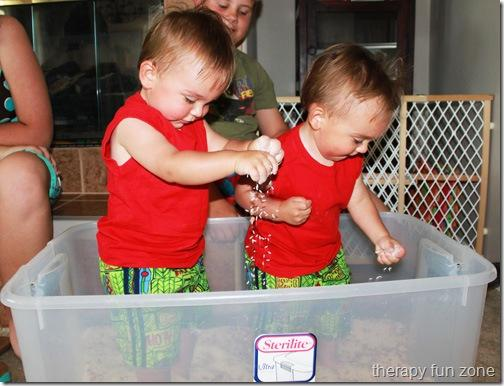

Rice or bean bins with cups and spoons
Homemade playdough (flour, salt, water)
Finger painting with shaving cream or yogurt
Water play in the sink or bathtub
Movement-Based (Vestibular/Proprioceptive)


Jumping onto pillows or couch cushions
Animal walks (bear crawl, crab walk)
DIY obstacle courses
“Heavy work” like pushing laundry baskets
Calming and Self-Soothing Activities


Stress balls or homemade balloon squeezes (filled with flour)
Glitter jars (“calm-down bottles”)
Wrapping up in a blanket (“burrito wrap”)
Listening to soft music or white noise
Using Sensory Play to Improve Daily Functioning
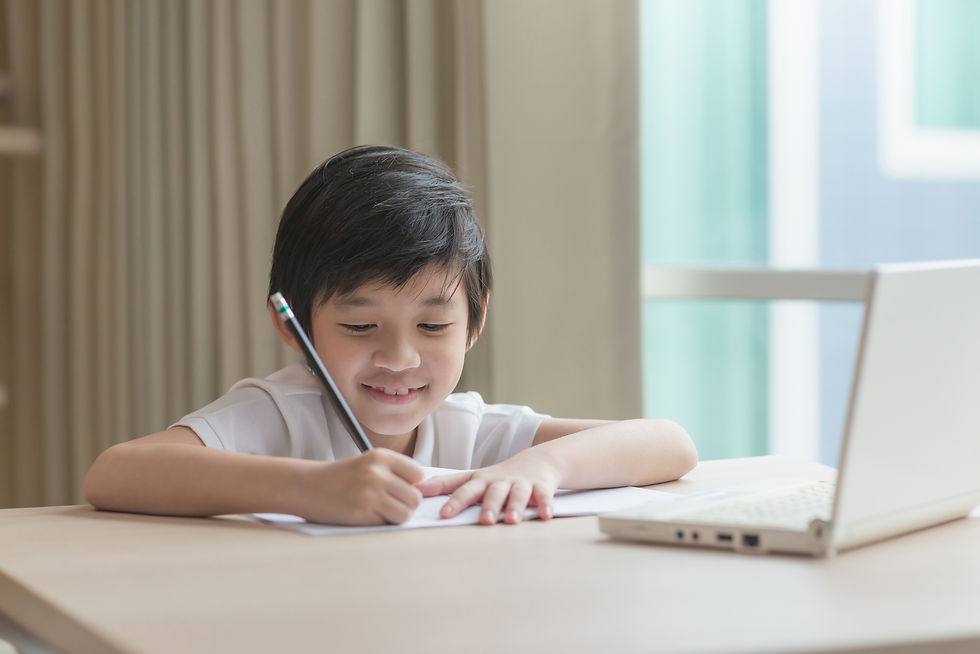
1. Homework and Focus
Many children struggle to sit and attend because their sensory systems are under- or over-stimulated.
Try this:
10–15 minutes of movement (jumping, pushing, climbing) before homework
Use fidgets (stress balls, putty) during work as long as it does not become a distraction
Allow standing or alternative seating
Why it works: Movement regulates arousal levels, making sustained attention more accessible.
2. Emotional Regulation
When children are overwhelmed, reasoning with them rarely works. Their nervous system needs calming first.
Try this:
Create a “sensory corner” with calming tools
Teach children to choose an activity when upset (squeeze, swing, wrap, breathe)
Use sensory play proactively, NOT just after meltdowns
Why it works: Sensory input directly influences the nervous system, helping children return to a regulated state.
3. Sleep Routines
Many children—especially those with anxiety or ADHD—struggle to “power down” at night.
Try this:
Warm bath with calming scents (lavender if tolerated)
Deep pressure (tight hugs, weighted blankets if appropriate)
Quiet tactile activities (drawing, playdough) before bed
Why it works: Predictable, calming sensory input signals safety and helps the body transition to rest.
4. Socialization
Sensory play can be a powerful bridge for children who struggle socially.
Try this:
Parallel play activities (two children playing in the same sensory bin)
Cooperative building or water play
Turn-taking games using tactile materials
Why it works: Shared sensory experiences reduce social pressure and create natural opportunities for interaction.
Final Thoughts
Sensory play is not just for toddlers, and it is not just about keeping children busy. It is a developmental necessity and a mental health tool. When we understand a child’s sensory needs, we shift from asking,“Why is my child behaving this way?”to“What does my child’s nervous system need right now?”
That shift is where real change begins.
In a world filled with screens, schedules, and stimulation, sensory play brings children back to something essential: using their bodies and senses to feel grounded, regulated, and ready to engage with life.
David Krasky, Psy.S. is a licensed school psychologist and author of Raising Future Adults



Comments