

5 Retro Toys That Improve Children’s Emotional Regulation and Attention Better Than Apps
- David Krasky
- Mar 14
- 4 min read


by David Krasky, Psy.S. Licensed School Psychologist and author of Raising Future Adults
Parents today are surrounded by apps, tablets, and “educational” digital toys promising to boost children’s learning and attention. But research increasingly suggests that many traditional toys are actually better for developing children’s emotional regulation, focus, and executive functioning. In my work with children and families, I often recommend going back to the basics. Surprisingly, some of the toys that best support emotional development are the same ones children have played with for generations.
These retro toys encourage imagination, persistence, frustration tolerance, and sustained attention—skills that fast-paced digital environments often undermine.
Below are five classic toys that help children develop stronger emotional regulation and attention skills than most apps or digital technology, along with research explaining why they work.
Why Traditional Toys Are Better for Emotional Development
Before discussing specific toys, it helps to understand what the research says about digital play versus traditional play. Several studies comparing electronic toys with traditional toys have found important differences.
A study published in Frontiers in Psychology found that children engaged in less verbal interaction and produced fewer unique words when playing with electronic toys compared to traditional toys. Less conversation means fewer opportunities for language, social learning, and emotional development.
Similarly, research reviewed by the American Academy of Pediatrics has found that toys which encourage open-ended, imaginative play support stronger cognitive, emotional, and social development than toys that control the child’s play experience through lights, sounds, or automated responses.
Traditional toys also strengthen executive functioning, which includes:
attention control
impulse regulation
emotional regulation
planning and persistence
These are the same skills children need to succeed in school and manage stress.
1. Wooden Blocks and Building Toys (Magnetic Tiles)


Few toys support attention and persistence better than simple building blocks.
Unlike digital games that guide the child through predetermined steps, blocks require children to plan, experiment, and tolerate failure when structures collapse.
This trial-and-error process strengthens problem-solving skills and builds frustration tolerance.
Emotional and Attention Benefits
Building toys help children:
develop sustained concentration
practice persistence when structures fall or when siblings/friends knock them over
improve spatial reasoning
build problem-solving skills
learn patience and delayed gratification
Best Age Range
Ages 2–10
Toddlers: stacking and knocking down towers
Preschoolers: imaginative construction
School-age children: complex structures and collaborative projects
2. Dolls and Action Figures (Imaginative Play)


Pretend play is one of the most powerful tools children have for processing emotions.
When children use dolls, action figures, or playsets, they act out social situations and emotional experiences. This helps them rehearse how to handle real-life challenges such as friendship problems, sibling conflicts, or anxiety.
Developmental psychologists often describe pretend play as a child’s primary laboratory for emotional learning.
Emotional and Attention Benefits
Pretend play helps children:
process emotions safely
develop empathy and perspective taking
improve storytelling and narrative thinking
build emotional regulation skills
Best Age Range
Ages 3–9
Preschool: family and caregiving scenarios
Early elementary: social storytelling and problem solving
3. Classic Board Games
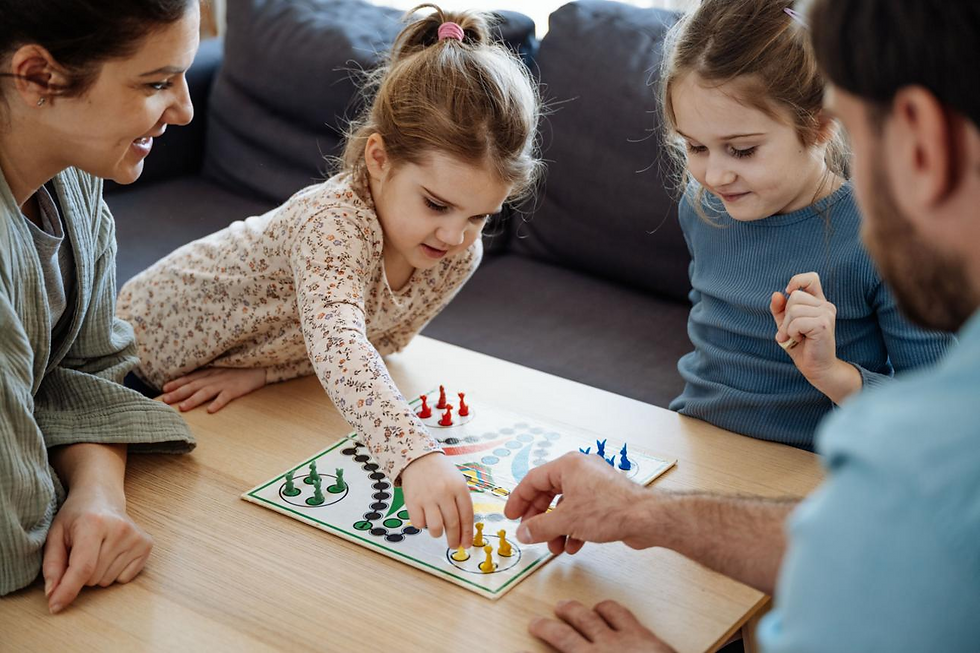

One of the hardest emotional skills for children to develop is waiting their turn.
Board games naturally teach patience, impulse control, and emotional regulation. Children must tolerate losing, manage frustration, and follow rules—skills that strengthen emotional resilience. Unlike fast-paced apps that constantly stimulate the brain, board games require children to slow down and think.
Emotional and Attention Benefits
Board games help children:
practice turn-taking
manage frustration and disappointment
strengthen working memory
improve social awareness
Best Age Range
Ages 4–12
Examples include:
memory matching games
Candy Land
checkers
card games
strategy games
4. Art Supplies and Creative Materials


Art is one of the most natural ways for children to regulate emotions. Drawing, painting, sculpting clay, and crafting all combine sensory engagement, creativity, and emotional expression.
Many children express feelings through art before they can fully describe them with words.
Creative play also slows down the nervous system, encouraging children to enter a calm, focused state similar to mindfulness.
Emotional and Attention Benefits
Creative materials help children:
express emotions safely
improve patience and attention span
reduce stress and agitation
strengthen fine motor skills
Best Age Range
Ages 2–12
Toddlers: scribbling and sensory art
Preschool: imaginative drawings
School age: detailed projects and crafts
If you want to incorporate technology as a way to encourage drawing, there are some great Youtube channels that teach children how to draw (https://www.youtube.com/@artforkidshub)
5. Jigsaw Puzzles


Puzzles are one of the best toys for building sustained attention and persistence.
Unlike digital games that provide immediate rewards, puzzles require children to tolerate difficulty and gradually work toward a solution. This process strengthens frustration tolerance and problem-solving abilities.
Emotional and Attention Benefits
Puzzles help children:
build concentration and focus
tolerate frustration
develop persistence
strengthen visual-spatial reasoning
Best Age Range
Ages 2–16
Toddlers: peg puzzles
Preschool: large floor puzzles
School-age children: complex jigsaw puzzles
The Problem With Many Digital Toys
Many digital toys are designed to capture attention quickly but not sustain it.
They rely on:
rapid stimulation
flashing lights
instant rewards (respawning = infinite lives, not like the old Super Mario days)
automated responses
This type of stimulation can train children to expect constant novelty, which may make slower, real-world activities feel less engaging. Think of all the times your child didn't have an iPad or video game and said they were bored. Traditional toys, on the other hand, encourage children to generate their own stimulation through imagination, creativity, and exploration.
The Bottom Line for Parents
The toys that best support children’s emotional development are often the simplest ones.
Look for toys that:
encourage imagination
allow open-ended play
require patience and persistence
promote interaction with other people
Technology will always be part of children’s lives, but healthy development still depends heavily on real-world play experiences. In many cases, the toys that support children’s emotional resilience and attention most effectively are the same ones children enjoyed long before screens ever existed.
For more parenting insights on raising emotionally resilient children, visit Raising Future Adults and explore additional articles on child development, attention, and emotional wellbeing.


Comments